
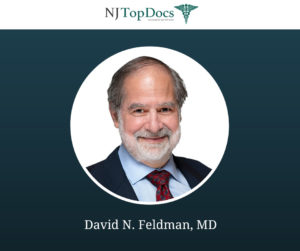
NJ TOP DOCS REVIEWED & APPROVED DAVID N. FELDMAN, MD OF ACTIVE JOINTS ORTHOPEDICS
David N. Feldman, MD of Active Joints Orthopedics has been reviewed and approved based on merit by NJ Top Docs for 2023. Dr. Feldman is a highly respected, pioneering orthopedic surgeon who specializes in joint surgery. He enjoys serving patients in Englewood, New Jersey where he uses the most up-to-date technologies and innovative techniques to optimize outcomes for patients.
Dr. Feldman is a leading practitioner in the field of orthopedic surgery and has long been an advocate of computer-assisted, minimally invasive hip and knee replacements using partial joint prosthetics and resurfacing techniques. His research into finding ways of extending the life of replacement hip joints led to the development of metal-on-metal hip replacement surgery at Englewood Hospital and Medical Center.
Among his research efforts, Dr. Feldman played a key role in the design of hip-resurfacing arthroplasties and undertook the role of the clinical investigator for two FDA hip-resurfacing trials that took place at Englewood Hospital and Medical Center and Holy Name Medical Center.
At Active Joints Orthopedics in Englewood, New Jersey, the goal is to provide every patient with the highest standard of orthopedic care and personal attention. Led by board-certified orthopedic surgeon David N. Feldman, MD, the team at Active Joints Orthopedics uses cutting-edge technologies, including a full range of injection therapies. Their state-of-the-art facility has an on-site digital X-ray department for added convenience.
From sports injury medicine to total joint replacement, the team at Active Joints Orthopedics offers comprehensive care for the full spectrum of musculoskeletal conditions. They treat patients of all ages, from athletes who get injured in their sports to children who get hurt on the playground.
Dr. Feldman is a pioneer in hip resurfacing and practices the latest techniques in orthopedic surgery. He performs minimally invasive surgical procedures and computer-assisted total joint replacements.
The team at Active Joints Orthopedics believes that physical rehabilitation is essential for successful recovery. Their on-site physical therapy center provides patients with the convenience of seeing their physician and physical therapist at the same visit. This also facilitates collaborative treatment between the physicians and physical therapists, ensuring optimal recovery for every patient.
To learn more, call Active Joints Orthopedics or book an appointment online today.
Services
-
 ACL Tearmore info
 -
Carpal Tunnelmore info
-
Hip Replacementmore info
-
Knee Replacementmore info
-
Arthritismore info
-
Rotator Cuff Tearmore info
-
Physical Therapymore info
-
Sports Injuriesmore info
-
Lower Back Painmore info
-
Neck Painmore info
-
Hip Resurfacingmore info
-
Occupational Therapymore info
-
Knee Arthroscopymore info
-
Knee Revisionsmore info
-
Shoulder Arthroscopymore info
-
Alternative Treatmentsmore info


Choose Your Provider


Words from our patients
-
"Dr. Feldman performed a total hip replacement on me and within 3 weeks I was back to life as I knew it and pain-free! He's patient, compassionate, and available."
-
"Dr Feldman provided us with a very detailed explanation regarding my injury ,and the surgery. It's very rare to see a busy Doc giving so much attention to my case."
-
"I would highly recommend Dr Feldman to anyone. For me, he's the best!"

Location
25 Rockwood Pl, Suite 425
Englewood, NJ 07631
Phone: 201-503-0447
Fax: 201-567-4039
Office Hours